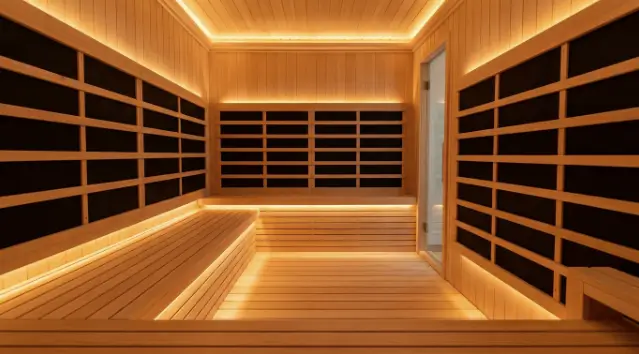
Owning an infrared sauna as a first-time buyer comes down to five things done in order: confirm the electrical setup before ordering, measure the space with the door swing and clearance in mind, start sessions cooler and shorter than instinct suggests, build a consistent weekly habit before adding extras, and put a simple maintenance routine in place from week one. Skipping the order, especially jumping straight to long, hot sessions before the body adjusts, is the most common reason beginners lose interest within the first month instead of settling into regular use.
Step 1: Confirm the Electrical Setup Before You Order
Before choosing a specific cabin, check whether the intended spot has a dedicated outlet or circuit available. Most one- and two-person cabins run on a standard 120-volt outlet rated for 15 or 20 amps, as long as nothing else shares that circuit. Larger four- and five-person cabins, and most full-spectrum models, usually need a dedicated 240-volt line, which means an electrician and, in most areas, a permit. Sorting this out before ordering avoids the common beginner mistake of a cabin arriving before the outlet it needs exists.
Step 2: Measure the Space, Then Measure It Again
Interior dimensions on a listing describe the cabin, not the room. A beginner needs to account for door swing, at least a few inches of clearance on the back and sides for airflow, and enough headroom to get the unit through a doorway or down a stairwell during delivery. Measuring twice, once for the finished footprint and once for the delivery path, catches problems before a cabin gets stuck halfway into a basement.
Step 3: Start Cooler and Shorter Than You Think You Need To
New users routinely set the temperature to the top of the range and stay in for 30 or 40 minutes on the first try, then feel wiped out and skip the next few sessions. A better starting point is 120 to 130 degrees Fahrenheit for 10 to 15 minutes, with water on hand. Raising temperature and duration gradually over two or three weeks builds tolerance without the crash that makes people quietly stop using an expensive purchase.
Step 4: Build the Habit Before Adding Extras
It is tempting to buy a chromotherapy light kit, a Bluetooth speaker, and an EMF meter in the same order as the cabin. A more useful sequence is establishing two or three sessions a week for the first month, then deciding which extras actually add to the routine versus which ones sounded good in the product listing. A beginner who skips this step often ends up with accessories that never get used and a habit that never fully forms, in that order.
Step 5: Put Basic Maintenance on the Calendar From Day One
Infrared cabins need less upkeep than traditional saunas, but “less” is not “none.” Wiping down benches and walls after each session with a mild, sauna-safe cleaner prevents buildup, and leaving the door cracked between uses lets the cabin air out and dry rather than staying sealed and damp. Checking the power cord, outlet, and any visible wiring every few months takes five minutes and catches wear before it becomes a repair. Treating this as a standing habit rather than an occasional chore is what keeps a cabin running well for a decade instead of three or four years.
Where to Compare Cabins Before Committing to One
Beginners researching their first purchase generally do better comparing a handful of listings side by side on wattage, interior dimensions, warranty length, and panel material rather than picking the first result. Specialty sellers, including the team at SweatDecks, list this information model by model, which makes it possible to compare a compact one-person pod against a larger family cabin on the actual numbers instead of guessing from photos alone.
What the Research Actually Supports for a New Owner
A 2018 review in Mayo Clinic Proceedings and a related 2023 review in the same journal both describe consistent, regular sauna use as the pattern associated with the cardiovascular and relaxation outcomes most studied, largely from Finnish cohort data. These are population-level associations, not a guarantee for any one person, and a beginner managing a heart condition, pregnancy, or another health concern should treat this as a reason to ask a doctor specific questions before starting a routine rather than as a green light on its own. For most healthy adults, the practical takeaway is that the benefits researchers keep finding are tied to showing up regularly, not to any one session being especially intense.
Giving the First Month Room to Be Imperfect
A missed week, a session cut short because the temperature felt too high, or a delivery delay while an electrician gets scheduled are all normal parts of getting a first infrared sauna up and running. The beginners who end up using their cabin for years are usually the ones who treated the first month as a settling-in period rather than expecting a perfect routine from day one.
Step 6: Know When to Call for Service Instead of Troubleshooting Alone
Most infrared cabin problems in the first year fall into a short list: a panel that stops heating evenly, a control display that behaves erratically, or a door seal that no longer closes flush. Before assuming the worst, a beginner can rule out the easy causes: a loose connection at the outlet, a breaker that tripped rather than a failed panel, or a door hinge that shifted slightly during delivery and just needs a minor adjustment. Most manufacturers include a customer support line specifically for this kind of troubleshooting, and using it before attempting a repair keeps the warranty intact, since opening the cabin’s interior panels without guidance can void coverage on some models.
A good habit is keeping the model number, purchase date, and warranty terms somewhere easy to find, a folder or a photo of the paperwork, rather than searching for them for the first time when something actually goes wrong. Beginners who set this up during Step 1, while confirming the electrical setup, save themselves a scramble later.
What a Realistic First-Year Budget Looks Like
Beyond the cabin’s purchase price, a first-year budget should include electrical work if needed, a bench cover or two, a basic cleaning supply, and a small buffer for any adjustment or service call. Electricity itself is a minor line item, typically a few dollars a month for a compact cabin used several times a week. The bigger, often overlooked cost is time: building a consistent habit takes a few weeks of trial and error on temperature, duration, and scheduling before it settles into something that feels automatic rather than like a chore squeezed into an already full evening.
Frequently Asked Questions
How long should a beginner’s first infrared sauna session last? Ten to fifteen minutes at a moderate setting is a reasonable starting point, working up to 20 to 30 minutes over a few weeks.
How often should a new owner use an infrared sauna? Three to four sessions a week is a common target once established, though starting with two sessions weekly for the first month builds tolerance first.
What temperature is right for a first-time user? Around 120 to 130 degrees Fahrenheit is a comfortable starting point, well below the 140 to 150 degree range experienced users often prefer.
What basic maintenance does a new infrared sauna need? Wiping down surfaces after use, airing out the cabin between sessions, and periodically checking the cord and outlet covers most of what a new owner needs.
References
- Cardiovascular and Other Health Benefits of Sauna Bathing: A Review of the Evidence, Mayo Clinic Proceedings, 2018
- Does the Combination of Finnish Sauna Bathing and Other Lifestyle Factors Confer Additional Health Benefits? A Review of the Evidence, Mayo Clinic Proceedings, 2023
- Clinical Effects of Regular Dry Sauna Bathing: A Systematic Review, Evidence-Based Complementary and Alternative Medicine, 2018
By Owen Castellano
